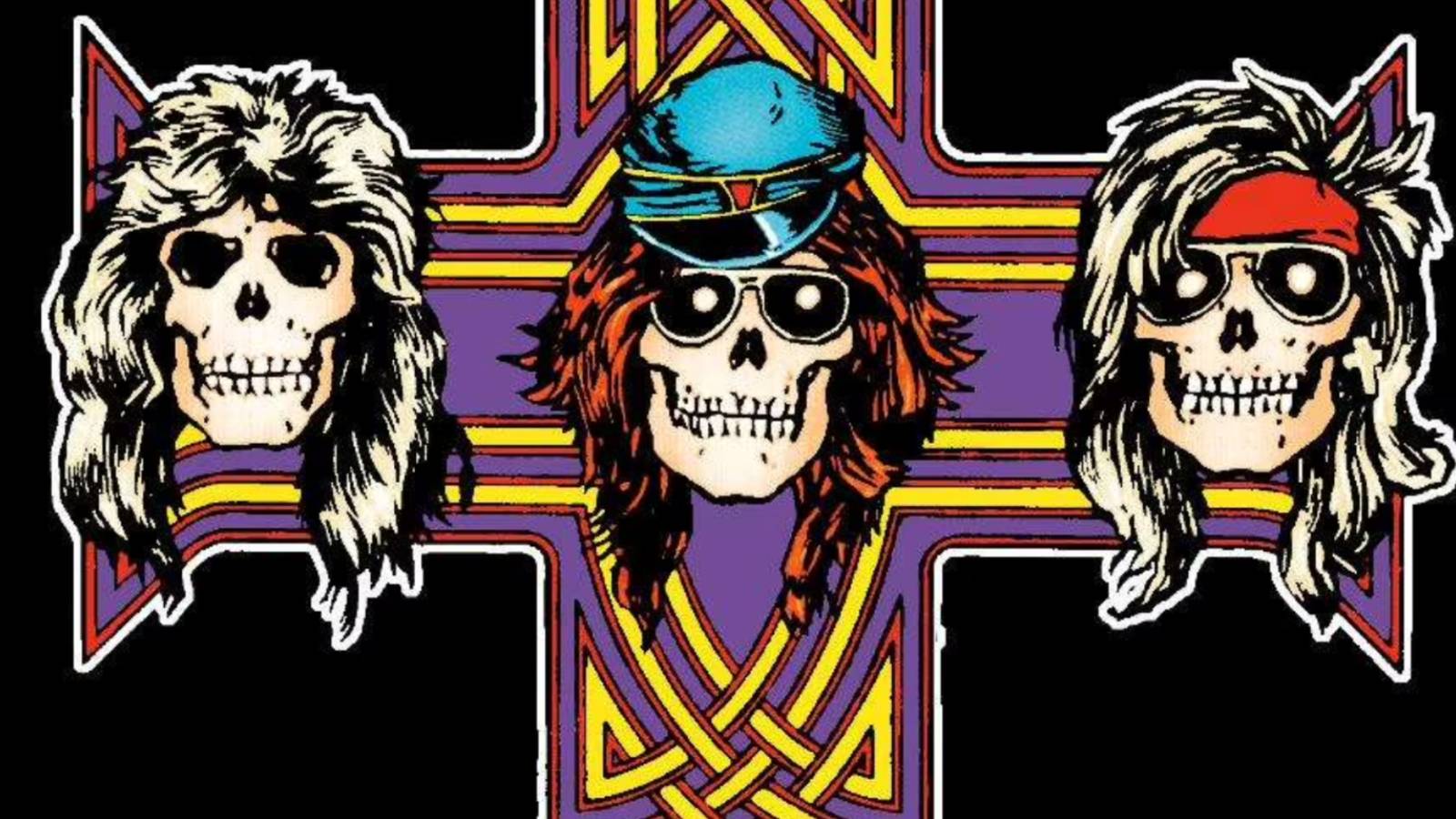
Image via Geffen Records Published Jul 30, 2026, 2:45 PM EDT Jeremy has more than 2700 published articles on Collider to his name, and has been writing for the site since February 2022. He's an omnivore when it comes to his movie-watching diet, so will gladly watch and write about almost anything, from old Godzilla films to gangster flicks to samurai movies to classic musicals to the French New Wave to the MCU... well, maybe not the Disney+ shows. His favorite directors include Martin Scorsese, Sergio Leone, Akira Kurosawa, Quentin Tarantino, Werner Herzog, John Woo, Bob Fosse, Fritz Lang, Guillermo del Toro, and Yoji Yamada. He's also very proud of the fact that he's seen every single Nicolas Cage movie released before 2022, even though doing so often felt like a tremendous waste of time. He's plagued by the question of whether or not The Room is genuinely terrible or some kind of accidental masterpiece, and has been for more than 12 years (and a similar number of viewings). When he's not writing lists - and the occasional feature article - for Collider, he also likes to upload film reviews to his Letterboxd profile (username: Jeremy Urquhart) and Instagram account. He has achieved his 2025 goal of reading all 13,467 novels written by Stephen King, and plans to spend the next year or two getting through the author's 82,756 short stories and 105,433 novellas. Sign in to your Collider account If you look over all the great classic rock out there, it’s honestly surprising to see how much of it’s from Britain, with rock and roll evolving in the U.S., but the British Invasion (as it was sometimes known) being largely responsible for so much “classic rock.” You’ve got The Beatles, Pink Floyd, Led Zeppelin, The Who, Black Sabbath, and David Bowie, just for starters… all artists who released at least several great albums during the whole classic rock era, which, for present purposes, spans the late 1960s until the end of the 1980s. Rock existed before then, and it’s continued to exist since then, but that is being considered as the period of classic rock here. To shout out some artists not involved with the whole British Invasion, where are the best American classic rock albums, with a limit of one album per artist, and also no bands that are considered part-American (so, Jimi Hendrix was American, but the Jimi Hendrix Experience was made up of him and two English musicians, Noel Redding and Mitch Mitchell, while Fleetwood Mac are also defined as a British and American rock band… apologies, Electric Ladyland and Rumours). 10 'Marquee Moon' (1977) Television Marquee Moon was such a cool album, is such a cool album, and, into the future, will probably remain a cool album. That’s a potentially unusual way to highlight it as singular and also the kind of thing that sounds effortless, even though it’s dense and technical in a way that was probably hell to record for Television (a cult band for sure, and one that only ever released two more studio albums post-Marquee Moon, with neither one being as strong). Plenty of bands would love for their best album to be as good as this, though. Marquee Moon peaks with its epic-length title track, which is fittingly right at the center of the entire album, but the tracks that surround it are also excellent. It’s an exciting and anxious listen, doing bold things with punk, rock, and a fair few other genres that make it eclectic-sounding in one way, but then it’s also very much its own thing – and surprisingly consistent – nonetheless. 9 'Raw Power' (1973) Iggy and the Stooges Another punk-adjacent album, Raw Power is technically proto-punk, and so it was punk before punk was cool. Iggy and the Stooges (the frontman Iggy Pop, if that wasn’t obvious) were one of those American bands that were doing things a bit out of the ordinary, and so they felt a bit more British in spirit, than American, but were indeed American… though before Iggy Pop and David Bowie collaborated on their solo Berlin-inspired albums, the latter did assist the former on this album. Bowie and Pop were the producers of Raw Power, and depending on which version of Raw Power you listen to, it’s either extremely loud, or pretty much the loudest album you'll ever hear. Pick your poison, though at least the poison – in either case – sounds pretty amazing. The sheer aggression here still feels impactful to listen to, well over half a century on from its initial release. 8 'Appetite for Destruction' (1987) Guns N' Roses Of all the albums from the 1980s mentioned here, Appetite for Destruction feels the most in line with what “classic rock” is, in the most traditional/conventional/classic sense. It’s loud and in-your-face, and maybe even a bit simplistic, with it not being all that hard to figure out what the songs here are generally about, and Guns N' Roses don’t really have aspirations beyond just rocking out and sounding big for almost an hour. They do it really well here, though. It’s tempting to try and resist something as straightforward and blunt as Appetite for Destruction, yet it really does rock, and that’s kind of what you sometimes want out of rock music, you know? There were later Guns N’ Roses albums that pushed things a bit far, with the ambition getting a little out of control, though everything feels right – and in its right place – on Appetite for Destruction, making this debut easily their best album overall. 7 'The Doors' (1967) The Doors This is meant as a compliment, but The Doors (by The Doors) sounds like a British rock album, at least in terms of being forward-thinking and very much out-there. It’s got the psychedelic thing going for it, a little like early Pink Floyd or some of what The Beatles were doing in the back half of the 1960s, and it’s really just the references to American things (there’s a take on “Alabama Song (Whisky Bar),” after all) that serve as a tip-off that The Doors are an American band. When it comes to “The End,” though, that’s the kind of thing that was so out there you can’t really compare it to too many other artists at the time, be they British or American or anything else. That closing track elevates The Doors from incredibly good to all-time status, and this self-titled debut is well and truly one of the most important classic rock albums of all time, too. 6 'Master of Puppets' (1986) Metallica If Marquee Moon and Raw Power can be counted as classic rock, even if they both lean toward different strands of punk in one way or another, then Master of Puppets can also be here. It’s not punk, though, being most easily definable as “thrash metal,” which is a sub-genre of heavy metal, and then heavy metal is a kind of rock music, so if you go back a few steps, well, there you are. This is the best album Metallica has ever released, though a very honorable mention should also go out to Ride the Lightning, which is similarly satisfying and also very consistent. Both albums are made up of eight (generally) long tracks that don’t feel long when you're listening to them. It’s more that Master of Puppets has even higher highs than Ride the Lightning, so it’s here instead, but it’s the kind of thing where if you like one album, you're pretty much guaranteed to also like the other. 5 'Doolittle' (1989) Pixies Sitting right on the edge of being classified as classic rock, Doolittle came out at the very end of the 1980s, and also feels difficult to include here because it was ahead of its time, sounding quite a bit like 1990s (or maybe even 2000s) alternative/indie rock. It also doesn’t contain what’s probably the most famous Pixies song, since “Where Is My Mind?” can be found on 1988’s Surfer Rosa instead. “Here Comes Your Man,” “Debaser,” and “Monkey Gone to Heaven” can be singled out as highlights, sure, but at the same time, this is one of those albums that kind of feels like nothing but highlights. And Surfer Rosa is also excellent, as a rock album, but Doolittle is even better, and just so consistent in a way that never really gets tiring to revisit and re-listen to. “Here Comes Your Man,” “Debaser,” and “Monkey Gone to Heaven” can be singled out as highlights, sure, but at the same time, this is one of those albums that kind of feels like nothing but highlights. You can’t really go wrong with anything here. 4 'Blonde on Blonde' (1966) Bob Dylan Given he’s made his fair share of absolutely classic albums, it’s hard singling out the best of Bob Dylan’s, but Blonde on Blonde has quantity alongside quality. Of his albums that are essentially perfect, Blonde on Blonde is the longest, and so you get more perfect music here than you do on his perfect albums that are more like 40 to 50 minutes long. That might be silly, but so is the act of trying to highlight only one Bob Dylan album in the first place. That’s before getting to the question of “Is he really rock?” to which the answer is “Yes, for the most part.” Some of his albums are definitely folk rock, and Blonde on Blonde has a bit more of a rock sound than something like (the also excellent) Blood on the Tracks. Something by Dylan had to go here. Might as well make it this remarkable double album. 3 'Born to Run' (1975) Bruce Springsteen It would be nice if Born in the U.S.A. was genuinely the best Bruce Springsteen album, because then it could be featured here, in a ranking of American classic rock albums, and that would be kind of cute. But no, Born to Run is the better album, though that does make it fair to observe how Springsteen really seems to deliver when he makes an album with a title that begins with “Born.” Two nickels, not a lot, still weird it happened more than once… all that jazz. Born to Run moves at such an impressive clip, with one great song after another, all across a perfectly paced 40-ish minutes of music. There’s nothing skippable here, and it’s another Doolittle situation where there are highlights (like the title track, “Jungleland,” and “Thunder Road”), but also no low-lights. As such, you really are best off listening to the whole album, resting easy with the knowledge that none of it will feel like anything close to a waste of time. 2 'Remain in Light' (1980) Talking Heads Talking Heads do some strange things with the rock genre on Remain in Light, even compared to the band’s previous music, with the first three albums by Talking Heads also feeling unconventional, by rock standards. It’s Speaking in Tongues, the next/fifth album, where Talking Heads feels a bit more approachable and broad, but Remain in Light is more interesting, and there are still moments on it that are very catchy. It contains “Once in a Lifetime,” after all, and that’s certainly a signature song for the band. On Remain in Light, though, that excellent standalone song is one piece of an incredibly well-paced and always engaging album, with the experience of listening to the entire thing from front to back feeling tremendously rewarding. In a few years, Remain in Light will be half a century old. Right now, it doesn’t even sound like it’s from more than a decade or two ago. It’s that fantastically out of time and singular. 1 'The Velvet Underground & Nico' (1967) The Velvet Underground and Nico Just for how influential it was, it feels appropriate to put The Velvet Underground & Nico here. It was the first Velvet Underground album, and the best overall, though it’s self-titled because Nico was also a big part of this album working the way it did, with the songs she has lead vocals on here honestly being kind of overlooked (“All Tomorrow's Parties” is especially fantastic). It’s also the only album here that sounds possibly more ahead of its time than the likes of Doolittle and Remain in Light. That is the easy thing to refer to, whenever it comes time to talk about The Velvet Underground & Nico, but there’s a very good reason for that. It’s one of those all-time great and important albums that, if you removed it from history, it’d be difficult to know what the music landscape would've come to look like in the years since 1967.
10 Best American Classic Rock Albums of All Time
Full Article
Original Source
Read the full article at Collider →KhanList aggregates and links to publicly available news content. We do not host full articles from third-party sources. Always verify important information with original sources.