
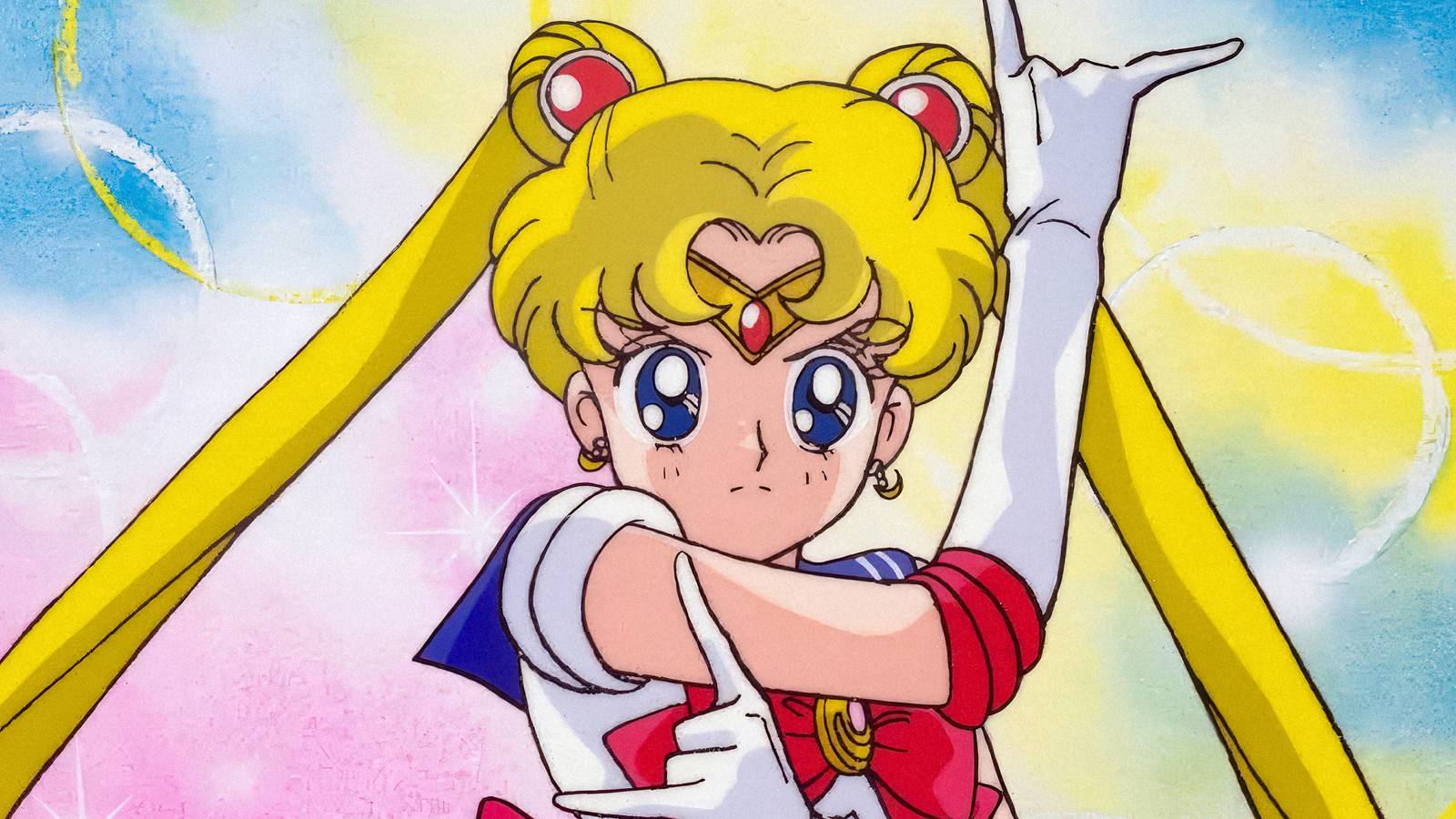
Image via Naoko Takeuchi/PNP, Toei Animation Published Aug 17, 2026, 4:05 PM EDT Lucas Kloberdanz-Dyck is a writer for Collider. He grew up creating lists, stories, and worlds, which led to his love of anime and video games. He attended Sheridan College where he earned an Honours Bachelor of Game Design. Lucas and his group won 1st place for technical innovation at LevelUp Toronto 2023, and he was also an intern for the Oakville Film Festival of Arts. Sign in to your Collider account Anime is one of the most popular mediums out there right now, with shows such as One Piece and Frieren: Beyond Journey's End establishing themselves as worldwide sensations. People love the medium so much because of its animation, storytelling, and creativity. However, not everything is original, and that is because hundreds of anime blueprints have influenced subsequent works. An anime blueprint is a series that became a quintessential title and defined or redefined the genre so much that other shows began using it as a template. That is why this list will feature ten anime masterpieces that became the blueprint based on originality, influence, popularity, how often it is used, and overall quality. There are more than ten, but these series are all flawless masterpieces that innovated in one shape or form. 'Neon Genesis Evangelion' (1995-1996) Image via TVTJP Avant-garde anime aren't that popular, nor do they usually follow a blueprint, and that is because they create their own; such was the case with Neon Genesis Evangelion. When the Earth faces another apocalypse event, the only hope is for Shinji and other teenagers to pilot mechs and fight angel-like aliens. However, it seems the higher-ups have some ulterior motives, putting the world in grave danger. Neon Genesis Evangelion is a genre-redefining anime that pioneered its avant-garde style and mental health focus. It is a deeply personal and intimate story mixed with gorgeous animation and a grand sci-fi conspiracy. It may feel all over the place, but it established a deconstructed focus and character drama prestige that is still felt in the anime industry today. Collider Exclusive · Sci-Fi Survival Quiz Which Sci-Fi World Would You Survive? The Matrix · Mad Max · Blade Runner · Dune · Star Wars Five universes. Five completely different ways the future went wrong — or sideways, or up in flames. Only one of them is the world your instincts were built for. Eight questions will figure out which dystopia, galaxy, or desert wasteland you'd actually make it out of alive. 💊The Matrix 🔥Mad Max 🌧️Blade Runner 🏜️Dune 🚀Star Wars TEST YOUR SURVIVAL → 01 You sense something is deeply wrong with the world around you. What do you do? The first instinct is often the truest one. APull on every thread until I understand the system — then figure out how to break it. BStop asking questions and start stockpiling — food, fuel, weapons. Questions don't keep you alive. CKeep my head down, observe carefully, and trust no one until I know who's pulling the strings. DStudy the patterns. Every system has a rhythm — learn it, and you learn how to survive it. EFind the people fighting back and join them. You can't fix a broken galaxy alone. NEXT QUESTION → 02 In a world of scarcity, what resource do you guard most fiercely? What we protect reveals what we believe survival actually requires. AKnowledge. If you understand the system, you don't need resources — you can generate them. BFuel. Everything else — movement, power, escape — runs on it. CTrust. In a world of fakes and informants, a truly reliable ally is rarer than any commodity. DWater. And after water, information — the two things empires are truly built on. EShips and credits. The galaxy is big — you survive it by being able to move through it freely. NEXT QUESTION → 03 What kind of threat keeps you up at night? Fear is useful data — if you're honest about what you're actually afraid of. AThat reality itself is a lie — that everything I experience has been constructed to keep me compliant. BA raid. No warning, no mercy — just the roar of engines and then nothing left. CBeing identified. Once someone with power decides you're a problem, you're already out of time. DBeing outmanoeuvred — losing a political game I didn't even know I was playing. EThe Empire tightening its grip until there's nowhere left to run. NEXT QUESTION → 04 How do you deal with authority you don't trust? Every dystopia has a power structure. Your approach to it determines everything. ASubvert it from the inside — learn its rules well enough to weaponise them against it. BIgnore it and stay out of its reach. The further from any power structure, the better. CAppear to comply while doing exactly what I need to do. Visibility is the enemy. DManoeuvre within it carefully. You can't beat a system you refuse to understand. EResist openly when I have to. Some things are worth the risk of being seen. NEXT QUESTION → 05 Which environment could you actually endure long-term? Survival isn't just tactical — it's physical, psychological, and very much about where you are. AUnderground bunkers and server rooms — cramped, artificial, but with access to everything that matters. BOpen wasteland — brutal sun, no shelter, constant movement. At least the threat is honest. CA dense, rain-soaked city where you can disappear into the crowd and nobody asks questions. DMerciless desert — extreme heat, no water, and something enormous living beneath the sand. EThe fringe — backwater planets and busy spaceports where the Empire's attention rarely reaches. NEXT QUESTION → 06 Who do you want in your corner when things fall apart? The company you keep is the clearest signal of who you actually are. AA tight crew of believers who've seen behind the curtain and have nothing left to lose. BOne or two people I'd trust with my life. Any more than that and someone talks. CNobody, ideally. Alliances are liabilities. I work alone unless I have no choice. DA community bound by shared hardship and mutual survival — people who need each other to last. EA ragtag team with wildly different skills and total commitment when it counts. NEXT QUESTION → 07 Where do you draw the line — if you draw one at all? Every survivor eventually faces a moment that tests what they're actually made of. AI won't harm the innocent — even the ones who'd report me without hesitation. BI do what I have to to protect the people I've chosen. Everything else is negotiable. CThe line shifts depending on who's asking and what's at stake. DI draw a long-term line — nothing that compromises my people's future, even if it'd help now. ESome lines, once crossed, can't be uncrossed. I know which ones they are. NEXT QUESTION → 08 What would actually make survival worth it? Staying alive is one thing. Having a reason to is another. AWaking others up — dismantling the illusion so no one else has to live inside it. BFinding somewhere — or someone — worth protecting. A reason to keep moving. CAnswers. Understanding what I am, what any of this means, before time runs out. DLegacy — shaping the future in a way that outlasts me by generations. EFreedom — for myself, for others, for every world still living under someone else's boot. REVEAL MY WORLD → Your Fate Has Been Calculated You'd Survive In…Your answers point to the world your instincts were built for. This is the universe your temperament, your survival instincts, and your particular brand of stubbornness were made for. The MatrixYou took the red pill a long time ago — probably before anyone offered it to you. You're a systems thinker who can't help but notice the seams in things. You're drawn to understanding how the system works before figuring out how to break it. You'd find the Resistance, or it would find you — your instinct for spotting constructed realities is the machines' worst nightmare. You function best when you have access to information and the freedom to act on it. The Matrix built an airtight prison. You'd be the one probing the walls for the door. Mad MaxThe wasteland doesn't reward the clever or the well-connected — it rewards those who are hard to kill and harder to break. That's you. You don't need comfort, community, or a cause larger than the next horizon. You need a vehicle, a clear threat, and enough fuel to outrun it — and you're good at all three. You are unsentimental enough to survive that world, and decent enough — just barely — to be something more than another raider. In the wasteland, that distinction is everything. Blade RunnerYou'd survive here because you know how to exist in moral grey areas without losing yourself completely. You read people accurately, keep your circle small, and ask the questions others prefer not to answer. In a city where humanity is a legal designation rather than a feeling, you hold onto something that keeps you functional. You're not a hero. But you're not lost, either. In Blade Runner's world, that distinction is everything. DuneArrakis is the most hostile environment in the known universe — and you are precisely the kind of person it rewards. Patience, discipline, and political awareness are your core strengths — and on Arrakis, they're survival tools. You understand that the long game matters more than any single victory. Others come to Dune and are consumed by it. You'd learn its logic and earn its respect. In time, you wouldn't just survive Arrakis — you'd begin to reshape it. Star WarsThe galaxy far, far away is vast, loud, and in a constant state of violent political upheaval — and you wouldn't have it any other way. You find meaning in being part of something larger than yourself — a cause, a crew, a rebellion. You'd gravitate toward the Rebellion, or the fringes, or whatever pocket of the galaxy still believes the Empire's grip can be broken. You fight — not because you have to, but because standing aside isn't something you're capable of. In Star Wars, that willingness is what makes all the difference. ↻ RETAKE THE QUIZ 'Haikyuu!' (2014-present) Image via Production I.G Most anime blueprints are older series, but some modern masterpieces can influence other works, and that is proven by Haikyuu! Hinata may be undersized, but he has big dreams of becoming a volleyball star. However, he must first learn to work together with another rookie who is far more arrogant. If they can form some chemistry, then maybe the team can relive their glory days and rise from the ashes. Haikyuu may be newer, but it is the most defining sports anime of all time. Older shows like Ashita no Joe are influential, but this series highlights the typical formula most sports series follow. It perfected the format to a T and further established itself as an anime blueprint. Haikyuu is such a fun underdog story and boasts endearing characters, proving to be a recipe for success. 'K-On!' (2009-2010) Image via TBS Anime genres and styles are vastly different because on one side are battle shounen, and on the other side are cute anime girl shows, such as K-On! Yui is excited to join a club, but when she mistakenly joins the light music club, she is forced to stay due to the lack of members. This coincidence of fate leads to lifelong memories and high school bonds that will last forever. Cute girls doing cute things is an anime-specific genre, and while it existed before, K-On created the blueprint. The music focus is surprisingly common nowadays, and the main point of having fun with friends and enjoying club life at school wasn't too popular before this series. K-On was a defining anime of the 2010s that popularized the genre and made the recipe for success at the same time. 'Monster' (2004-2005) Image via Madhouse Naoki Urasawa is a legendary manga author, and while he himself has a personal blueprint he usually follows for each series, others tend to use what he created in Monster. After Dr. Tenma saves a child's life instead of the mayor, that same kid becomes a serial killer in the future. Taking matters into his own hands, Tenma plans to kill Johan, but will he be able to pull the trigger when they meet face to face? Monster is an anime blueprint that abandoned typical tropes in favor of grounded realism, proving to be a prestigious narrative that is the pinnacle of storytelling in this medium. As one of the best thriller anime series, it created a winning formula that focused on philosophical classes, profound character dynamics, and a slow-burning pace that hooks the audience from start to finish. 'Sword Art Online' (2012-2019) Image via Aniplex The isekai genre is one of the most polarizing, mainly because of the lack of quality, but it got so popular because of one show: Sword Art Online. Kirito and thousands of other players excitedly jump into the new hit VR video game, but when it is revealed that those who die in the game die in real life, the stakes ramp up as everyone searches for a way to escape unharmed. Most isekai nowadays are cheap rip-offs of everything that came before it, and the original creator of the modern isekai was Sword Art Online. It wasn't the first of the genre, but this series was the one that helped the genre reach a more mainstream level of success. It may be heavy on the tropes and wasted a lot of potential, but so do most isekai shows, showcasing how it influenced the rest of the genre. 'Bleach' (2004-present) Battle shounen are the most popular type of anime, meaning there are a lot of blueprints out there, but the one used most for modern series is from Bleach. Ichigo has always been able to see spirits, but when a Soul Reaper lends him some powers, he realizes his full potential, helping them deal with any threats to the supernatural and human worlds. Bleach is part of the Big Three, so some fans might be surprised that the other two aren't here, and while they are more popular, Bleach is arguably more influential to the current landscape. There are a lot of modern-day anime masterpieces, and Bleach was the blueprint that set the foundation for the popularization of the urban fantasy genre and a sense of style and badass action. 'Sailor Moon' (1992-1997) Image via Toei Animation Action anime aren't reserved for boys; there are plenty of girl-oriented battle series out there, including Sailor Moon. Usagi is a bit of a klutz, but when a magical cat gives her powers beyond her wildest dreams, she becomes a Sailor Guardian to protect Earth. However, saving the world is a lot harder than expected, especially if she wants to have fun on the side. The magical girl genre is the biggest in the shoujo demographic, and it is all thanks to Sailor Moon, which single-handedly set the blueprint. It is such an iconic anime that is synonymous with the genre, and that alone is proof of how influential and recognizable it is. Sailor Moon isn't just a blueprint; it is the quintessential magical girl anime that transcends the limits of its genre. 'Mobile Suit Gundam' (1979-1980) Image via Netflix The sci-fi genre isn't as popular as it once was for anime, but its peak was reached because of the blueprint that was Mobile Suit Gundam. The colony of Zeon suddenly declares war on Earth, quickly gaining superiority because of their mecha warriors. But months later, when Earth develops its own mechs, they strike back with a vengeance to even out the war. Mecha are a staple of anime, and Mobile Suit Gundam was the one that created them, forever changing the industry and setting the standard for the blossoming mecha subgenre. Every subsequent show has tried to replicate its success; even future seasons of Mobile Suit Gundam use the original as a blueprint, and that is because its fantastic anime power system, epic story, and creative battles are so legendary. 'Astro Boy' (1963-1966) Image via Mushi Production Only the most influential anime shows can make this list, and so Astro Boy obviously had to make an appearance as the grandfather of anime. After the death of his son, a scientist creates a lookalike android who is later sold to the circus. But fate would later find him in good hands, as the powerful robot now works with a new scientist to fight crime and bring peace into the world one day at a time. Astro Boy is an outdated anime, and all old things must expire, but that doesn't erase its influence and importance as the first serialized anime series. Art style, tropes, animation, story—you name it; Astro Boy created the blueprint that all classic series followed. It isn't just a blueprint; Astro Boy's legacy is set in stone and forever untouchable. 'Dragon Ball Franchise' (1986-present) Image via Toei Animation The top two could realistically go either way, but this list has Astro Boy in second and Dragon Ball right at the top, even though we aren't ranking anything. From his time as a boy fighting in martial arts tournaments to his later years defending the Earth from aliens to his present life in alternate dimensions, Goku has always been a savior of the planet and his friends. While Astro Boy is the original blueprint, the modern landscape has changed a bit, and Dragon Ball is what influenced that, but both are still easily the most influential. All modern shounen follow some tropes or influences of this iconic series, whether it be the characters, structure, narrative, vibe, or arcs. Dragon Ball is one of the best anime series of all time because it is the essential anime blueprint that all shows must follow. Network Fuji TV Cast Masako Nozawa, Mayumi Tanaka, Hiromi Tsuru, Toru Furuya, Naoki Tatsuta, Naoko Watanabe, Mami Koyama, Shigeru Chiba, Joji Yanami, Chikao Ohtsuka, Hirotaka Suzuoki, Kohei Miyauchi, Kenji Utsumi, Takeshi Aono, Toshio Furukawa, Tessyo Genda, Hiroko Emori, Eiko Yamada, Mario Castañeda Seasons 1
10 Anime Masterpieces So Great They Became the Blueprint
Full Article
Original Source
Read the full article at Collider →KhanList aggregates and links to publicly available news content. We do not host full articles from third-party sources. Always verify important information with original sources.