
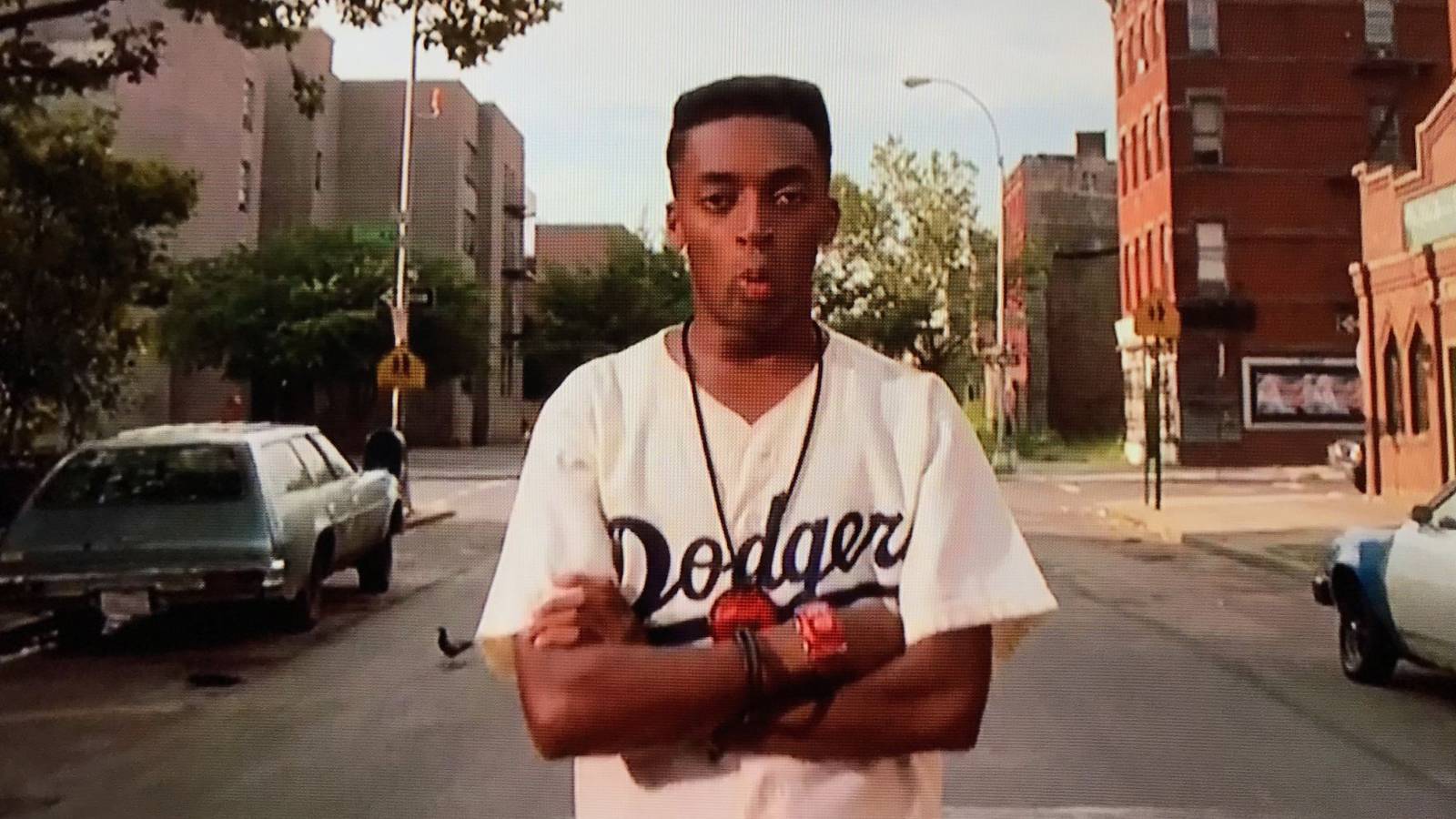
Image via Universal Pictures Published Sep 8, 2026, 3:23 PM EDT William likes watching movies and writing about those movies. Anything else is minutae. Sign in to your Collider account In many ways, American cinema is inexorably tied to American history. All the movies made in this country since the inception of cinema in some way reflect their contemporary culture or are a reaction to it, creating and chasing trends, serving as time capsules, and sometimes predicting the future. You might not necessarily learn anything about America at the time these movies were made or gain new insights, but that doesn't make them any less requisite. From stone-cold classics and masterpieces to landmark movies that shaped the entire history of film moving forward, all the films on this list are essential. They come from vastly different eras and filmmakers but collectively represent the evolution of cinema in America. A silent comedy, a space opera, a seminal slasher and a postmodern crime classic are all among the ten American movies that everyone must watch at least once. 'The General' (1926) Image via United Artists The earliest era of cinema, the silent era, has many seminal American classics. The Great Train Robbery, Greed, and Wings should be on any student of cinema's list. The Birth of a Nation is the ugliest reflection of America from the era, but there's a much better film featuring a Confederate hero that manages to be massively entertaining while still offering an uncomfortable glimpse at history. Buster Keaton's The General was inspired by real events that occurred during the Civil War, which the filmmaker uses as the basis for some of his most memorable stunts and gags of all time. Keaton plays Johnnie, a train engineer who has a great love for the titular locomotive. When the engine and the woman Johnnie loves are both taken by Union soldiers, he engages in hot pursuit that leads to a series of stunts that are still a sight to behold. The General is a testament to Keaton's skills as a performer and is often regarded as his greatest masterpiece. That doesn't excuse its gentle treatment of the Confederacy or what it stood for, but The General is as much a piece of history as the events it depicts. It must be watched in the context of the era it was released and reckoned with for what it reflects. 'The Wizard of Oz' (1939) Image via Warner Bros. Pictures Coming out of the silent era, film burst into sound, and from black and white into color. Those two developments didn't happen simultaneously, but in terms of impact, The Wizard of Oz might as well have been the first film to do both. So stunning was the fantasy film's transition from sepia-toned Kansas to the Technicolor land of Oz, and so memorable were the songs that filled its soundtrack, that no other film from the era could compare. Many still can't, and The Wizard of Oz remains the most significant American fantasy film of all time. L. Frank Baum's wonderful world of Oz was adapted multiple times before the seminal classic directed by Victor Fleming was released, and there have been many interpretations since, some far closer in tone to Baum's source material, but none have ever usurped it. Judy Garland will always be Dorothy, the slippers will always be ruby red, and no one can walk the yellow brick road without humming, "We're Off to See the Wizard." The Wizard of Oz is an iconic American classic, and its magic makes it a must-watch to this day. 'Citizen Kane' (1941) Image via RKO Radio Pictures Much like the sound and color of The Wizard of Oz, the cinematic techniques on display in Orson Welles' acclaimed Citizen Kane had already been implemented in earlier films. What Welles did in his directorial debut was combine them all and codify a new cinematic language that filmmakers are still speaking to this day. Look at any of the other films released in 1941 and look at many of them released in the years after, and the effect of Citizen Kane is clear. It's a landmark of American cinema that needs to be watched to recognize and understand its revolutionary status. Through deep focus cinematography, a non-linear narrative, and jump cuts, Welles tells the story of his character, Charles Foster Kane, in a way that may look quaint in comparison to the average film today, but which was a wake-up call to Hollywood in 1941. It proved the unique power film has as a storytelling medium, and its impact has reverberated through generations of directors. Legacy notwithstanding, Citizen Kane is still an engrossing drama, charting the rise and fall of publishing magnate Kane and the corrosive nature of unchecked power in pursuit of the American Dream. 'High Noon' (1952) Image via United Artists When it comes to Westerns, The Searchers is the film most often referred to as quintessential. While the visuals of that John Ford classic are undeniably powerful, as is the performance by John Wayne, and its impact on many filmmakers is immeasurable, there are also some uneven tonal and comedic elements often overlooked by its biggest champions. It's absolutely worth watching, to be clear, but if there's a Western that's a must-watch, it's High Noon, a tightly made masterpiece that has just as much claim to the crown as The Searchers. Gary Cooper's Marshal Will Kane is an iconic hero of American cinema, the quintessential depiction of quiet courage, as he stoically prepares to face a threat, outnumbered and abandoned. His unwavering moral code has been co-opted by members on both sides of the political aisle as an example of what they consider to be their personal brand of American exceptionalism. The film also famously inspired the infamously conservative Wayne to respond with his own film, Rio Bravo. When it comes to the Wild West, contemporary moral codes may not always apply cleanly, but there's no doubting the entertainment value. 'Psycho' (1960) Image via Paramount Pictures There are too many essential American horror films to properly pay tribute to. A small sampling includes all the classic Universal Monsters, the invading aliens from films like The Thing From Another World, and the giant mutant monsters in movies like Them! They all pale in comparison to the evil that lurks behind the innocent face of a killer in Alfred Hitchcock's Psycho. The film would inspire a thousand slashers through Norman Bates, the murderous boy next door who himself was inspired by the real evil of murderer Ed Gein. Author Robert Bloch used the story of Gein to inform the novel that would become Hitchcock's classic film. Psycho was made on a smaller budget than Hitchcock's previous films, using the crew from his television series to cut down on costs. That unassuming production belied a film that would shock critics and audiences thanks to its content, the suspense of Hitchcock's direction, and the power of Anthony Perkins' performance as Norman. American audiences had never seen a villain who looked as familiar as the motel proprietor, and while he might seem tame in comparison to the cinematic killers that followed in his footsteps, Psycho is still a potent must-watch horror film. Collider Exclusive · Horror Survival Quiz Which Horror Villain Do You Have the Best Chance of Surviving? Jason Voorhees · Michael Myers · Freddy Krueger · Pennywise · Chucky Five killers. Five completely different ways to die — if you're not smart enough, fast enough, or self-aware enough to avoid it. Only one of them is the villain your particular set of instincts gives you a fighting chance against. Eight questions will figure out which one. 🏕️Jason 🔪Michael 💤Freddy 🎈Pennywise 🪆Chucky TEST YOUR SURVIVAL → 01 Something feels wrong. You can't explain it — you just know. What do you do? First instincts are the difference between the survivor and the first act casualty. ALeave immediately. I don't need to understand a threat to respect it. BStay quiet and observe. If I can see it, I can understand it. If I can understand it, I can avoid it. CStay awake. Whatever this is, I am not going to sleep until I feel safe again. DConfront it directly. Fear grows in the dark — I'd rather know what I'm dealing with. ECheck everything, trust nothing. The threat might be closer than I think — and smaller. NEXT QUESTION → 02 Where are you most likely to find yourself when things go wrong? Setting is everything in horror. Where you are determines which rules apply. ASomewhere remote — a cabin, a campsite, off the grid and away from people. BA quiet suburban neighbourhood where nothing ever happens. Except tonight. CIn my own head — the most dangerous place of all, depending on what's already in there. DWherever children are — because something about this place attracts the worst things. ESomewhere ordinary — a house, a toy store, a place where the last thing you'd expect is a threat. NEXT QUESTION → 03 What is your most reliable survival asset? Every survivor has a quality the villain didn't account for. What's yours? APhysical fitness — I can run, I can swim, I can outlast something that relies on brute persistence. BSpatial awareness — I always know the exits, the hiding spots, the fastest route out. CPsychological resilience — I've faced my worst fears before. They don't have the same power over me. DEmotional steadiness — I don't panic. Panic is what gets you caught. EScepticism — I don't underestimate threats because of how they look. Size is irrelevant. NEXT QUESTION → 04 What kind of fear is hardest for you to fight through? Knowing your weakness is the first step to not dying because of it. AThe unstoppable — something that will not stop, cannot be reasoned with, and is always getting closer. BThe invisible — a threat I can feel but can't locate, watching from somewhere I can't see. CThe psychological — something that uses my own mind and memories against me. DThe unknowable — something ancient, shapeless, that feeds on the fear itself. EThe mundane — a threat so ordinary-looking that no one will believe me until it's too late. NEXT QUESTION → 05 You're with a group when things start going wrong. What's your role? Horror movies are brutally clear about who survives group situations and who doesn't. AThe one who says "we need to leave" first — and means it, even when no one listens. BThe one who stays quiet, watches the others, and figures out the pattern before anyone else does. CThe one who holds the group together when panic sets in — because someone has to. DThe one who asks the questions nobody wants to ask — because ignoring them gets people killed. EThe one who takes the threat seriously when everyone else is laughing it off. NEXT QUESTION → 06 What's the horror movie mistake you're most likely to make? Honest self-assessment is a survival skill. Denial is not. AGoing back for someone — I know I shouldn't, but I can't leave them behind. BAssuming I'm safe once I've found a hiding spot. That's when it finds me. CFalling asleep when I absolutely cannot afford to. Exhaustion is its own enemy. DLetting my curiosity override my instincts — I always need to understand what I'm dealing with. EDismissing the threat because of how it looks. That's exactly what it wants. NEXT QUESTION → 07 What's your best weapon against something that can't be stopped by conventional means? Every horror villain has a weakness. The survivors are always the ones who find it. AThe environment itself — I use the terrain, the water, the geography against it. BPatience — I wait, I watch, and I strike at the one moment it doesn't expect. CLucidity — if I can stay in control of my own mind, it loses its primary weapon. DCourage — facing it directly, refusing to run, taking away the fear it feeds on. EImprovisation — I use whatever's at hand, however unconventional. Creativity over brute force. NEXT QUESTION → 08 It's the final scene. You're the last one standing. How did you make it? The final survivor always has a reason. What's yours? AI kept moving. I never stopped, never hid for too long, never let it corner me. BI figured out the pattern before anyone else did — and I used it against the thing following it. CI stayed awake, stayed lucid, and refused to give it the one thing it needed most. DI stopped being afraid of it. And the moment I did, everything changed. EI took it seriously from the start — and I never once made the mistake of underestimating it. REVEAL MY VILLAIN → Your Survival Odds Have Been Calculated Your Best Chance Is Against…Your instincts, your strengths, and your particular way of thinking under pressure point to one villain you actually have a fighting chance against. Everyone else — good luck. Jason VoorheesJason is relentless, but he is also predictable — and that is the gap you would exploit. He moves in straight lines toward his target. He doesn't strategise, doesn't adapt, doesn't outsmart. He simply pursues. Your ability to keep moving, use the environment, and resist the panic that freezes most victims gives you a genuine edge. The Crystal Lake survivors were always the ones who stopped running in circles and started thinking about terrain, water, and distance. You think like that. Which means Jason, for all his indestructibility, would face someone who simply refused to be where he expected. Michael MyersMichael watches before he moves. He is patient, methodical, and almost impossible to detect — until it's too late for anyone who isn't paying close enough attention. But you are paying attention. You notice the shape in the window, the car parked slightly wrong, the silence where there should be sound. Michael's power lies in the invisibility of ordinary suburbia — the fact that nothing ever looks wrong until it already is. Your spatial awareness and instinct to map every room, every exit, and every shadow before you need them is precisely the quality Laurie Strode had. You are not a victim waiting to happen. You are someone who already suspects something is wrong — and acts on it. Freddy KruegerFreddy wins by getting inside your head — using your own fears, your own memories, your own subconscious as weapons against you. That strategy requires a target who can be destabilised. You are harder to destabilise than most. You've faced uncomfortable truths about yourself and you haven't looked away. The survivors on Elm Street were always the ones who understood what was happening and chose to face it rather than flee from it. Freddy's greatest weakness is that his power evaporates in the presence of someone who refuses to give him the fear he feeds on. Your psychological resilience — the ability to stay grounded when reality itself becomes unreliable — is exactly the quality that keeps you alive here. PennywisePennywise is ancient, shapeshifting, and feeds on terror — but it has one critical vulnerability: it cannot function against someone who genuinely stops being afraid of it. The Losers Club didn't survive because they were braver than everyone else. They survived because they faced their fears together, and faced them honestly. You ask the questions others avoid. You look directly at what frightens you rather than turning away. That directness — the refusal to let fear fester in the dark — is Pennywise's worst nightmare. It chose the wrong target when it chose you. You are exactly the kind of person whose fear tastes like nothing at all. ChuckyChucky's greatest advantage is that nobody takes him seriously until it's already too late. He exploits the gap between how something looks and what it actually is. You don't have that gap. You take threats seriously regardless of how they present — and you never make the mistake of underestimating something because of its size or appearance. Chucky relies on surprise, on the delay between recognition and response. You close that delay faster than almost anyone. Your instinct to treat every unfamiliar thing with appropriate scepticism — rather than dismissing it because it seems absurd — is the exact quality that keeps you breathing. Against Chucky, not laughing is already winning. You are very good at not laughing. ↻ RETAKE THE QUIZ '2001: A Space Odyssey' (1968) Image via MGM Science fiction was in a similarly fantastical state as horror in the decades that preceded its most influential film. Ray guns, flying saucers and invading aliens were all common elements of the genre when Stanley Kubrick released his hard sci-fi masterpiece 2001: A Space Odyssey. The film took a much more realistic approach to its depiction of space travel, while also leaving room for hopeful speculation about what the future might have in store for humanity. Kubrick co-wrote the film with Arthur C. Clarke and consulted with many other titans of science fiction to bring their vision of an advanced civilization that has commercialized space travel. The visual effects were all accomplished with pre-digital technology, and they remain spectacular. The odyssey of a group of astronauts on a mission to investigate a mysterious alien monolith is not necessarily complex in its plotting, but rather in its visual storytelling and cosmic themes. 2001: A Space Odyssey is a must-experience film that offers a lot to engage with and ponder over. 'The Godfather' (1972) Image via Paramount Pictures At the same time as 2001: A Space Odyssey was venturing beyond the stars, in Hollywood there was a new movement that was beginning to grow. A New Hollywood was forming, one where a young generation of filmmakers were given unparalleled creative control to craft challenging and uncompromising narratives with far less restraint in depicting violence and sexuality. The Graduate, Bonnie and Clyde, and Taxi Driver are all must-watch films from this movement, but if there's one that's absolutely essential, it's The Godfather. A prestigious adaptation of Mario Puzo's pulp crime novel, Francis Ford Coppola's American masterpiece has often been cited, along with several other films on this list, as the greatest movie ever made. That's a subjective matter, but it's not hard to see why when watching this epic saga of an American organized crime family. The Corleones are the ultimate American success story, with all the violence and betrayal inherent to it. Everything about The Godfather makes it a must-watch: the writing, the direction, the performances, the beginning, the middle, and the end. It's an American classic from top to bottom. 'Star Wars' (1977) Image via 20th Century Studios If there's a kind of film that could be called fundamentally American, it's the blockbuster. The outsized production scale and cost of these massive movies are American ambition, and often excess, on display on the big screen. While this list features many films that qualify as blockbusters due to their financial success and popularity, it would still be incomplete if it didn't include one built on the modern template. That template was set by Steven Spielberg's Jaws and then permanently frozen in carbonite by George Lucas' phenomenal Star Wars. A masterclass in worldbuilding, Star Wars transported audiences to a galaxy far, far away but kept them grounded in the fundamentals of storytelling with a plot that cleanly follows a classic hero's journey. Luke Skywalker may live light-years away, but he's instantly recognizable as a character. So too are Han Solo, Obi-Wan Kenobi, and Princess Leia, and their struggle against the evil Empire. Lucas built on a foundation of classics with a brand-new mythology and groundbreaking visual effects, and in the process made a film that everyone in 1977 considered a must-watch. 'Do the Right Thing' (1989) Image via Universal Pictures While all the preceding entries on this list are undeniable must-watch movies, they also represent a fairly limited view of the diversity of American cinema. There are many films made by vastly different American filmmakers that offer much-needed contrast to the majority viewpoint. Moonlight, Chan is Missing, and Tangerine all offer representations of lived experiences outside the Hollywood status quo, but if there's a must-watch movie that offers an incendiary counterpoint, it's Spike Lee's Do the Right Thing. Set over one sweltering summer's day in the Bed-Stuy neighborhood of Brooklyn, the film is a blistering portrait of race relations in America. Its living collage of characters collide with increasing volatility, until the film becomes a powder keg ready to explode. Its themes and observations haven't lost any of their potency in almost forty years, proving their necessity. Do the Right Thing isn't the only must-watch movie offering a dissenting view of the American experience, but it's a damn good place to start. 'Pulp Fiction' (1994) Image via Miramax Films The final must-watch film is one born out of the '90s indie movement that became its own pop culture phenomenon and created a subgenre of distinct crime films. The ripple effects of Quentin Tarantino's Pulp Fiction extend far beyond becoming the de facto dorm room poster for film bros. It was a new benchmark for postmodern cinema, a movie in as much conversation with itself as it was with the cinematic lineage that led to it. Pulp Fiction may have been rooted in film noir, '70s exploitation, and New Hollywood classics, but it also planted new ideas for the future of cinema. Tarantino was far from the first to make a film that was a self-reflexive pastiche or homage to existing works of genre, but his particular approach was so singular that it became branded as Tarantinoesque. The films that would later be labeled as such would mimic Pulp Fiction's nonlinear narrative, pop-culture-savvy dialogue, and '70s soundtrack, but none had Tarantino's distinct voice. He's a divisive filmmaker, but there's no denying that his films command attention. Pulp Fiction Release Date September 10, 1994 Cast John Travolta, Samuel L. Jackson, Uma Thurman, Bruce Willis, Ving Rhames, Harvey Keitel, Eric Stoltz, Tim Roth, Amanda Plummer, Maria de Medeiros, Quentin Tarantino, Christopher Walken, Rosanna Arquette, Peter Greene, Duane Whitaker, Angela Jones, Phil LaMarr, Steve Buscemi, Bronagh Gallagher, Laura Lovelace, Frank Whaley, Burr Steers, Paul Calderon, Jerome Patrick Hoban, Michael Gilden Runtime 154 minutes Director Quentin Tarantino Writers Quentin Tarantino, Roger Avary
10 American Movies That Everyone Must Watch at Least Once
Full Article
Original Source
Read the full article at Collider →KhanList aggregates and links to publicly available news content. We do not host full articles from third-party sources. Always verify important information with original sources.