
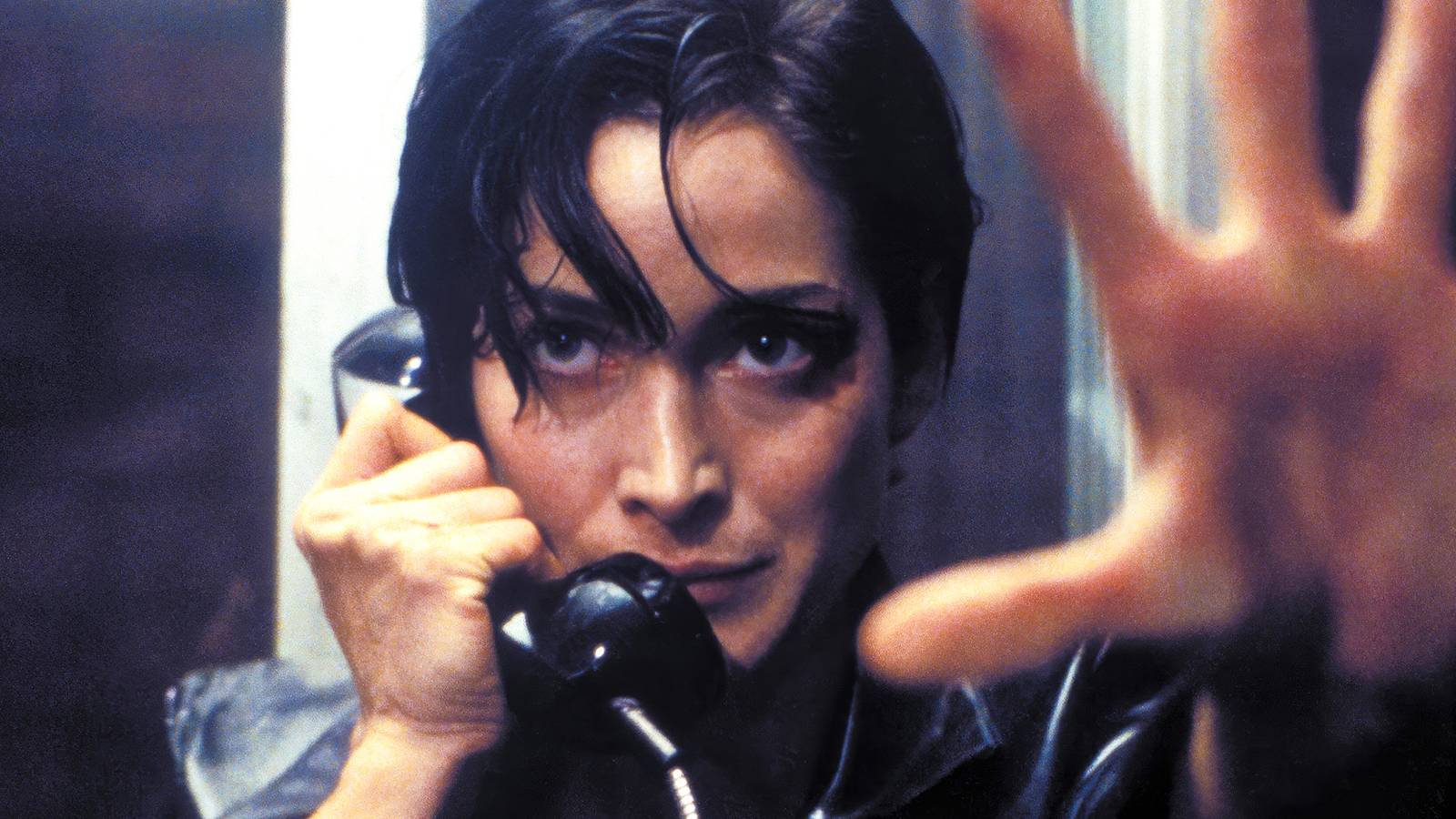
Image via Warner Bros. Published Aug 11, 2026, 6:21 PM EDT Ryan Heffernan is a Senior Writer at Collider. Storytelling has been one of his interests since an early age, with his appreciation for film and television becoming a particular interest of his during his teenage years. This passion saw Ryan graduate from the University of Canberra in 2020 with an Honours Degree in Film Production. In the years since, he has found freelance work as a videographer and editor in the Canberra region while also becoming entrenched in the city's film-making community. In addition to cinema and writing, Ryan's other major interest is sport, with him having a particular love for Australian Rules football, Formula 1, and cricket. He also has casual interests in reading, gaming, and history. Sign in to your Collider account Cinema is a copycat industry. The emergence of one revolutionary new idea typically sparks a surge of very similar films as writers, directors, and studios strive to explore the concept or style in a unique way. In many respects, action cinema is defined by this, with dominating trends stemming from the impact and brilliance of a handful of special movies that pioneer new approaches to the genre. Ranging from pictures that proved the psychological, emotional, and cerebral scope action cinema could achieve to gritty post-apocalyptic thrillers that imbued the genre with a new energy and aesthetic, and even to a couple of early classics that serve as the first steps towards blockbuster cinema as we know it today, these movies established a blueprint for action mayhem. Some are well over 50 years old, others stem from lands far beyond Hollywood, and yet all of them continue to influence cinema to this very day. 'The Bourne Identity' (2002) Image via Universal Pictures Spy movie cinema was in such a rut in the late ‘90s and early 2000s that, for a time, the comedic absurdity of Austin Powers was the highlight of the genre. While its camp excess is certainly enjoyable—and a tongue-in-cheek callback to the early pioneers of the genre, particularly the Bond movies—contemporary audiences were craving something with more grit and dramatic intensity. The Bourne Identity proved this point quite emphatically. Following amnesiac spy Jason Bourne (Matt Damon) as he strives to uncover his past life and identity while being pursued by CIA agents, the film flaunts a visceral edge through grounded realism, frantic editing, and a sense of relentless momentum and suspense. Rejecting all sense of bombast and bawdiness, The Bourne Identity inspired more than just modern spy movies to embrace a colder and more callous tone. 'Raiders of the Lost Ark' (1981) Image via Paramount Pictures Steven Spielberg is no stranger to being on the frontlines of cinematic evolution. While movies like Jaws and Close Encounters of the Third Kind may be more renowned triumphs for him in this regard, Raiders of the Lost Ark had a clear impact on action-adventure entertainment throughout the 1980s. Its charismatic though ordinary hero, rhythmic escalation of narrative stakes, understanding of the value of a “MacGuffin” in action cinema, and even the glorious impact of its Peruvian prologue are pioneers of the genre. Raiders is a masterclass in propulsive momentum and character-driven stunt work. The story of Indiana Jones’ (Harrison Ford) race to find the Ark of the Covenant before the Nazis can obtain it has become a timeless icon of Hollywood grandeur and artistry. While it remains unsurpassed, it has inspired and informed a litany of imitators over the ensuing decades. 'The Raid' (2011) Image via XYZ Films By the early 2010s, blockbuster cinema had embraced the ease, convenience, and seemingly ceaseless possibilities of computer-generated visual effects. The Raid emerged as an instant cult classic because of its defiance of this trend, as well as its technical perfection and the death-defying brilliance of its actors. The brutal martial arts thriller follows an Indonesian cop and his team as their raid of a drug lord’s apartment complex devolves into a manic fight for survival against hordes of criminal thugs. Redefining fight scene choreography in modern action cinema, its use of steady camera shots and clear wide angles showed the expertise and craft of the performers, making for a more visceral and tangible viewing experience that many movies since have replicated. Furthermore, the narrative style of The Raid reminded many that action movies don’t necessarily need to be intricately plotted to thrive, but can constantly elevate the stakes while streamlining the narrative beats and emphasizing the spectacle. 'Mad Max' (1979) Image via Roadshow Film Distributors Following vengeful drifter Max Rockatsansky (Mel Gibson) as he patrols the dystopian wasteland of civilization’s ruin in search of the biker gang that murdered his family, Mad Max became a surprise international sensation. Its snarling grit and George Miller’s penchant for immaculately staged action carnage became far more than just a trending title. Its thematically rich worldbuilding, frenetic energy, and its bombastic excess all shifted notions on what action cinema could be in the late ‘70s. It would be easy to view Mad Max 2: The Road Warrior as being the true ignition point for raw action spectacle, and while the sequel is probably a better movie, it does thrive by doubling down on ideas established in the first film. Also serving as a flagship of Australian New Wave cinema on the global stage, Mad Max both redefined action at its most feverishly manic and bolstered the contemporary Ozploitation movement. Collider Exclusive · Action Hero Quiz Which Action Hero Would BeYour Perfect Partner? Rambo · James Bond · Indiana Jones · John McClane · Ethan Hunt Five legends. Five completely different ways of getting out alive — with style, with muscle, with charm, with luck, or with a plan so intricate it probably shouldn't work. Ten questions will reveal which action hero was built to have your back. 🎖️Rambo 🍸James Bond 🏺Indiana Jones 🔧John McClane 🎭Ethan Hunt FIND YOUR PARTNER → 01 You're dropped into a dangerous situation with no warning. What do you need most from a partner? The first few seconds tell you everything about who belongs beside you. ASomeone who already has three contingency plans running and is calmly working through all of them. BSomeone who reads the terrain instinctively and knows exactly how to use it against the enemy. CSomeone who keeps their nerve and their sense of humour when everything is falling apart. DSomeone who knows the history of wherever we are and what we're walking into. ESomeone with the right contact, the right cover identity, and the right exit already arranged. NEXT QUESTION → 02 You have to get somewhere dangerous, fast. How do you travel? How you get there is half the mission. AOn foot through terrain no one else would attempt — I move where vehicles can't follow. BOn a motorcycle, a cargo plane, or anything else that gets me there before I think too hard about it. CIn something that belongs to someone else — borrowed, stolen, or improvised under fire. DFirst class, with a cover identity and a gadget that does something I won't explain until it's needed. EBy whatever means are available — I've driven, flown, and once arrived by camel. The destination matters, not the method. NEXT QUESTION → 03 You're pinned down and outnumbered. What does your ideal partner do? This is when you find out what someone is really made of. ADisappears into the environment, flanks them silently, and ends it before I've reloaded. BCracks a one-liner, grabs a fire extinguisher or a chair, and improvises something that somehow works. CProduces a gadget specifically designed for this exact scenario and uses it with infuriating precision. DPulls out a whip, a pistol, and an archaeological insight that somehow gets us out alive. ENeutralises the threat with maximum efficiency and minimum words — they were already three moves ahead. NEXT QUESTION → 04 The mission is paused. You have one evening to decompress. What does your partner suggest? Who someone is when the pressure drops is who they actually are. AA bar with terrible lighting, cold beer, and absolutely no questions about feelings. BThe finest restaurant in the city, a bottle of something expensive, and a conversation that is equal parts brilliant and exhausting. CA local dig site, a museum after hours, or a long story about why that particular artefact matters to human civilisation. DPizza. Bad TV. Falling asleep halfway through a movie neither of you were watching anyway. EA debrief that turns into three hours of contingency planning that somehow becomes the most fun you've had all week. NEXT QUESTION → 05 How do you prefer your partner to communicate mid-mission? Good communication is the difference between partners and a liability. APrecise and minimal — tell me what I need to know and nothing else. Every word has a cost. BDeadpan and dry — keeping it light keeps me sharp, even when everything is on fire. CEnthusiastic and slightly chaotic — but always with useful information buried somewhere in the noise. DCalm and controlled through an earpiece, with a plan that covers every variable I haven't thought of yet. EBarely at all — silence is a language and they speak it fluently. NEXT QUESTION → 06 Your enemy is powerful, well-resourced, and has the upper hand. How should your partner approach them? The approach to the enemy defines the partnership. AInfiltrate their inner circle, learn everything, and dismantle them from inside out before they know we're there. BStudy the historical pattern — every villain of this type has a weakness written somewhere in the past. CGet them talking. The more they monologue, the more time I have to figure out how to beat them. DGo through them. Directly. With as much force as the terrain allows. EFind the one thing they haven't accounted for — there's always one thing — and make sure we're holding it. NEXT QUESTION → 07 Things go badly wrong and you're captured. What do you trust your partner to do? Who someone is when you need them most is the only thing that matters. ACome in alone, quietly, and get me out before anyone knows they were there. BHave already been working on the extraction since the moment I disappeared — the plan is already running. CCome in loud, come in fast, and worry about the collateral damage later — I'd do the same for them. DUse every resource, every contact, and bend every rule until I'm out — they don't leave people behind. ECharm their way in somehow, bluff through the hard part, and still manage to look good doing it. NEXT QUESTION → 08 What does your ideal partner bring to the table that you couldn't replace? A great partner fills the gap you didn't know you had. ATechnology that shouldn't exist yet and the training to use it under any conditions. BSurvival instinct so refined it borders on supernatural — and the scars to prove it's been tested. CKnowledge of history, language, and culture that makes them invaluable in places where force is useless. DThe ability to walk into any room in the world and immediately become the most trusted person in it. EStubbornness that refuses to accept a situation is hopeless — and the improvisational skill to back it up. NEXT QUESTION → 09 Every partnership has a cost. Which of these can you live with? No one comes without baggage. The question is whether you can carry it together. AA partner who never fully switches off — always watching exits, always calculating threats, even at dinner. BA partner who gets the job done brilliantly but has the emotional availability of a locked filing cabinet. CA partner who makes everything ten times more complicated than it needs to be — but who always comes through. DA partner who gets personally attached to every relic, ruin, and artefact we encounter, which slows everything down. EA partner who was not built for this and knows it — but shows up anyway, every time, without being asked. NEXT QUESTION → 10 It's the final moment. Everything is on the line. What do you need from your partner right now? The last question is the most honest one. AOne line. Absolutely dry. Delivered like the world isn't ending. Then we move. BNothing said at all — just a look that means we both already know what has to happen. CA plan I don't fully understand that somehow accounts for everything, delivered in thirty seconds flat. DA piece of historical context that reframes the entire situation and tells us exactly what to do next. ESomeone who steps forward instead of back — because that's who they've always been. REVEAL MY PARTNER → Your Partner Has Been Assigned Your Perfect Partner Is…Your answers have pointed to one action hero above all others. This is the person built to have your back — for better or considerably, spectacularly worse. RamboYour partner doesn't talk much, doesn't need to, and will have assessed every threat in your immediate environment before you've finished your first sentence. John Rambo is not a man of plans or politics — he is a force of nature shaped by survival, loyalty, and a capacity for endurance that goes beyond anything training can produce. He will not leave you behind. He has never left anyone behind who deserved to come home. What you get with Rambo is the most capable, most quietly ferocious partner imaginable — one who has been through things that would have broken anyone else, and who chose to keep going anyway. You'll never need to ask if he has your back. You'll just know. James BondYour partner will arrive perfectly dressed, perfectly briefed, and with a cover story so convincing it'll take you a moment to remember what's actually true. James Bond is the most professionally dangerous person in any room he enters — and the most disarmingly charming, which is the point. He operates in a world of layers, where nothing is what it appears and every advantage is used without apology. You'll never be bored. You'll occasionally be furious. But when it matters — when the mission is genuinely on the line and the margin for error has collapsed to nothing — Bond is exactly the partner you want. He has survived things that have no business being survivable. He does it with style. That is not nothing. Indiana JonesYour partner will know the history, the language, the cultural context, and exactly why the thing everyone else is ignoring is actually the most important thing in the room. Indiana Jones is brilliant, reckless, and occasionally impossible — but he is also one of the most resourceful, most genuinely knowledgeable partners you could find yourself beside. He approaches every situation with a scholar's eye and a brawler's instinct, which is an unusual combination and a remarkably effective one. He hates snakes and gets personally attached to objects of historical significance, both of which will slow you down at least once. It doesn't matter. What Indy brings is irreplaceable — and the adventures you'll have together will be the kind people write books about. Assuming you survive them. John McClaneYour partner was not supposed to be here. He does not have the right equipment, the right information, or anything approaching the right odds. He has a sarcastic remark and an absolute refusal to accept that the situation is as bad as it looks. John McClane is the greatest accidental hero in the history of action cinema — a man whose superpower is stubbornness, whose contingency plan is improvisation, and whose capacity to absorb punishment and keep moving would be alarming if it weren't so useful. He will complain the entire time. He will make it significantly more chaotic than it needed to be. And he will absolutely, unconditionally, without question come through when it counts. Yippee-ki-yay. Ethan HuntYour partner has already run seventeen scenarios by the time you've finished reading the briefing, and the plan he's settled on involves at least two things that should be physically impossible. Ethan Hunt operates at the absolute edge of human capability — technically, physically, and intellectually — and he brings the same relentless precision to protecting his partners that he brings to dismantling organisations that shouldn't exist. He is not easy to know and he will never fully tell you everything. But he will carry the weight of the mission so completely, so absolutely, that your job is simply to trust him — and the remarkable thing is that trusting him always turns out to be the right call. The mission will be impossible. He will complete it anyway. ↻ RETAKE THE QUIZ 'The Matrix' (1999) Image via Warner Bros. Pictures A reality-breaking, mind-bending masterpiece that has come to define both the aggressive new wave edge of ‘90s cinema and the dazzling possibilities of blockbuster entertainment, The Matrix stands tall among the most iconic and influential movies of all time. With action sequences inspired by everything from Hong Kong martial arts cinema to Japanese anime, the film is renowned for its unique choreography and visual effects, both of which proved that surreal expressionism had a place in mainstream action. Its cyberpunk aesthetic, character designs, and emphasis on technology also marked a new horizon for action cinema, but The Matrix’s most inspiring element has been its approach to storytelling possibilities. Its success with the idea of the reality we know being a simulation has seen a multitude of ensuing action movies play in similar high-concept worlds, from the layered dreams of Inception to the robot-assisted revenge of Upgrade. 'A Better Tomorrow' (1986) Image via Golden Princess Amusement While it might not be one of the most iconic movies action cinema has ever seen, the brutal and bloody brilliance of A Better Tomorrow did pioneer one of the biggest and most enrapturing subgenres in Asian action. Aptly named “Heroic Bloodshed,” films within the category typically emphasize ancient warrior values like brotherhood, honor, loyalty, and redemption while exhibiting highly stylized action scenes that blend the ferocity of a shootout with the elegance and precision of balletic choreography. Directed by John Woo, A Better Tomorrow follows a career criminal recently released from prison who finds his path forward torn between trying to reconcile his fractured relationship with his police officer brother and exacting his revenge on the traitor in his gang that sold him out to the law. In blending melodramatic masculinity with flourishes of sentimentality and pathos while still presenting an eye-popping bonanza of action chaos, A Better Tomorrow launched a new wave of Asian action cinema. Woo himself returned to it multiple times with such hits as The Killer and Hard Boiled in the following years. 'Lethal Weapon' (1987) Image via Warner Bros. Featuring the greatest character dynamic action cinema has ever seen, Lethal Weapon is a lasting beacon of perfection in terms of the marriage of comedic entertainment and excessive action awe. Powered by its sharp screenplay and two exceptional lead performances, it follows two mismatched police officers who have to work together to bring down a drug-smuggling operation. In order to be successful, they must put aside their differences, but that comes with complications as Robert Murtaugh’s (Danny Glover) by-the-book rigidness clashes with Martin Riggs’ (Mel Gibson) volatile eccentricity. The list of action-comedy films released since that have mimicked Lethal Weapon’s formula of complementary character work, action excitement, and underlying charm is extensive. Within buddy-cop movies alone, Rush Hour, The Nice Guys, and Bad Boys are just some of the more renowned movies to have used Lethal Weapon as a blueprint. 'Dr. No' (1962) Image via Amazon MGM Studios There is some speculation as to when action cinema truly started. The genre as we know it today was born in the late ‘70s and throughout the ‘80s in a spectacular era of exuberant excess and muscle-clad machismo. However, the origins of this genre explosion date back to the early 1960s and the release of the very first James Bond movie, Dr. No. While Goldfinger perfected the formula, the 1962 original spawned it, setting a blueprint of spectacle, style, and storytelling that many action movies still mimic. In many respects, it was the birth of the genre as a male fantasy. Its tale of 007’s (Sean Connery) effortless heroics and womanizing ways became a framework for action bravado that influenced everything from character archetypes and plot structure to the incorporation of music, the importance of style, and even marketing and franchising. It is perhaps the defining stepping stone from the secular release module of Old Hollywood to the expansive strategy films like Jaws and Star Wars would establish just over ten years later, thus pioneering the phenomenon and vast accessibility of true blockbuster cinema. 'Seven Samurai' (1954) Image via Toho As is the case with a great many Akira Kurosawa films, there is a litany of qualities, techniques, and ideas that Seven Samurai perfects. Its realization of large-scale battle sequences was decades ahead of its time, its ability to blend the brutality of combat with thematic depth was an early indication of the dichotomy the genre could achieve, and its momentous pacing over the course of its epic 202-minute runtime has all become staples of action cinema. However, Seven Samurai’s greatest contribution to the genre might be its storytelling and its characters. As it follows seven warriors who unite to help defend a poor and remote farming village from raiders, it sets an outline for the “assemble a team” trope that has not been surpassed in the 72 years since Seven Samurai was released. From milestone superhero movies like The Avengers to military thrillers like The Dirty Dozen, action-packed Westerns like The Magnificent Seven (which was itself a direct remake of Seven Samurai), and even high-octane heist flicks like Ocean’s Eleven, the Japanese masterpiece has been a huge inspiration on all of cinema. 'Die Hard' (1988) Image via 20th Century Studios Throughout most of the 1980s, action cinema was all about excess and abundance. The spectacle was all that mattered, and the bigger and more ridiculous it was, the better. While this approach certainly delivered some easily enjoyed classics, it lacked grounding and emotional gravitas, but that changed when Die Hard was released in 1988. With Bruce Willis’ effortlessly engaging, wonderfully earnest, and appropriately vulnerable lead performance, Die Hard transformed the genre from a circus of overinflated machismo into a treat of relatable and high-stakes excitement. Its reduction of the sheer scale of the spectacle in favor of controlled and concise tension was also revolutionary, famously leading to a litany of spin-off movies that were aptly summarized as “Die Hard on a [blank].” With its faultless and precise screenplay, rounded characters, masterful command of suspense, and its concentrated setting, Die Hard not only presented one of the most absorbing and rewatchable blockbusters of all time, but the defining blueprint for action cinema going forward. Die Hard Release Date July 15, 1988 Cast Bruce Willis, Alan Rickman, Alexander Godunov, Bonnie Bedelia, Reginald VelJohnson, Paul Gleason, De'voreaux White, William Atherton, Hart Bochner, James Shigeta, Bruno Doyon, Andreas Wisniewski, Clarence Gilyard Jr., Joey Plewa, Lorenzo Caccialanza, Dennis Hayden, Al Leong, Gary Roberts, Hans Buhringer, Wilhelm von Homburg, Robert Davi, Grand L. Bush, Bill Marcus, Rick Ducommun, Matt Landers Runtime 132 minutes Director John McTiernan Writers Jeb Stuart, Steven E. de Souza, Roderick Thorp
10 Action Movie Masterpieces So Great They Became the Blueprint
Full Article
Original Source
Read the full article at Collider →KhanList aggregates and links to publicly available news content. We do not host full articles from third-party sources. Always verify important information with original sources.