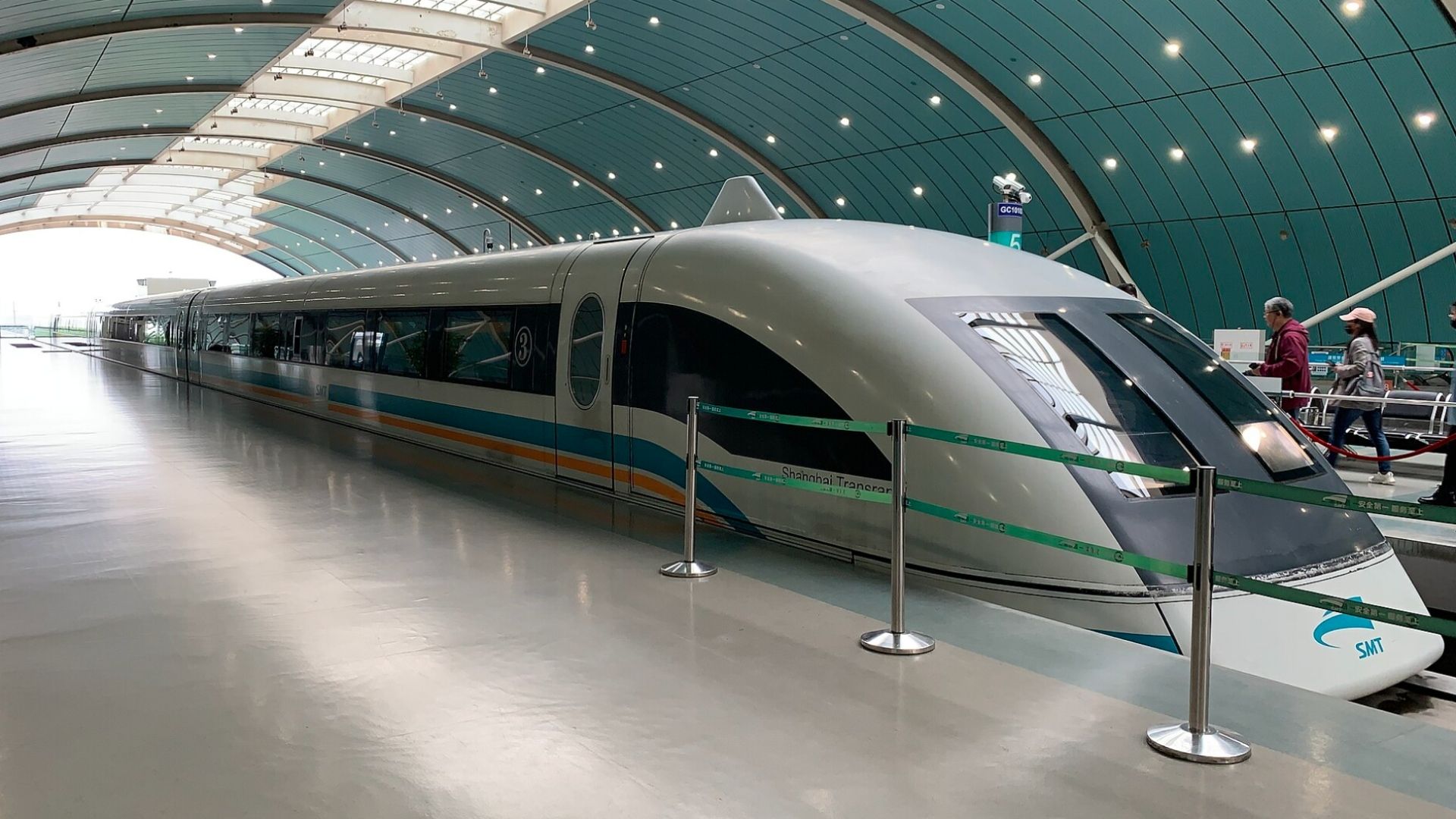
A 2,447-pound magnetic levitation vehicle has accelerated from rest to 497 miles per hour in only 5.3 seconds on a 0.62 miles (one kilometer) test track at Donghu Laboratory in China’s Hubei province. The run marked the third time the Hubei test platform had broken the world record for short-distance maglev acceleration within six months. The researchers developed the system to test ultra-high-speed electromagnetic propulsion, levitation, positioning, and braking technologies. Beyond future transport systems, the underlying technology could eventually support electromagnetic launch systems for rockets and fighter jets. Magnetic propulsion eliminates wheel friction in maglev Unlike conventional trains, the experimental vehicle does not rely on wheels to move along the track. Magnetic forces lift it above the guideway, removing wheel-rail contact and the associated friction. Alternating electromagnetic fields generated by coils along the track create a traveling magnetic wave. This wave pulls and pushes the vehicle forward, operating like a precisely controlled giant slingshot. The test infrastructure must maintain exceptionally tight tolerances to keep the lightweight vehicle stable at extreme speeds. Deviations along the track are reportedly limited to just 0.5 millimeters, while the control system maintains millimeter-level positioning accuracy during operation. The platform also demonstrated that reaching extreme speeds did not prevent controlled braking. After attaining 497 mph (222 m/s), the vehicle reportedly came to a smooth stop within slightly more than 656 feet (200 meters). Three records in six months The Hubei test platform completed its first public run in June 2025, when the vehicle reached approximately 181 m/s (404 mph) in 7.1 seconds. That trial established the system’s first world record for short-distance maglev acceleration in its class. Researchers increased the top speed to roughly 194 m/s (433 mph) the following month. The November test then raised the benchmark to 222 m/s while considerably reducing the time required to reach maximum velocity. According to CCTV Finance, the three runs validated several critical technologies, including transient high-power energy delivery, electromagnetic propulsion, high-speed levitation control, precise positioning, and emergency braking. Another Chinese research team has demonstrated similarly rapid progress. CCTV previously aired footage of National University of Defense Technology researchers accelerating a roughly 2,425-pound vehicle to 194 m/s in only two seconds on a 1,310-foot track. From vacuum trains to rocket launches Data from the Hubei facility could support the development of ultra-high-speed transport operating inside low-pressure or vacuum tubes. Removing both wheel friction and much of the aerodynamic resistance could allow future vehicles to sustain aircraft-like speeds on the ground. However, the record-setting vehicle remains a laboratory model, not a prototype passenger train. Scaling the technology would require engineers to overcome major challenges involving energy consumption, passenger safety, vehicle size, infrastructure costs, and the construction of longer precision-aligned tracks. Its nearer-term value may lie outside passenger transport. The electromagnetic propulsion system could be adapted to accelerate rockets or military aircraft before takeoff, reducing their dependence on onboard fuel. Related systems could also power maglev elevators and frictionless industrial transport equipment.Recommended ArticlesGet the latest in engineering, tech, space & science - delivered daily to your inbox.Atharva is a full-time content writer with a post-graduate degree in media & amp; entertainment and a graduate degree in electronics & telecommunications. He has written in the sports and technology domains respectively. In his leisure time, Atharva loves learning about digital marketing and watching soccer matches. His main goal behind joining Interesting Engineering is to learn more about how the recent technological advancements are helping human beings on both societal and individual levels in their daily lives.
0 to 497 mph in 5.3 secs: China’s maglev model makes record with frictionless travel
Full Article
Original Source
Read the full article at Interestingengineering →KhanList aggregates and links to publicly available news content. We do not host full articles from third-party sources. Always verify important information with original sources.